All About Hair
07/09/2023
Self-tanners: why use them instead of sunbathing
07/09/2023
Indice
Understanding the beard
The beard consists of hairs that cover the cheeks and chin of teenagers and adults. Beard hairs originate from hair follicles, which are small indentations in the skin. At the base of the follicle is the hair bulb, which is responsible for constructing the hair strand.
Beard growth
While beard hairs are present from childhood and resemble other body hairs, they begin to grow continuously and become coarser during puberty due to testosterone. With the average face covering an area of about 25 cm², this means there are approximately 20,000 to 25,000 hairs on an adult male’s face. Beard hairs typically grow at angles of 30 to 60 degrees and increase by about half a millimeter per day. The diameter and density of these hairs are genetically determined and vary by skin type. Factors such as metabolism, physical and mental activity, and the changing seasons can also influence their growth rate.
If left unshaved, beard hairs can grow up to over a meter in length. However, maintaining such length requires significant care, including shaping and combing for aesthetic purposes, and thorough cleaning for hygiene. For practicality, hygiene, and time-saving reasons, most people opt to shave their beards.
Common shaving methods
Wet shaving
Wet shaving involves using a blade, often with water and soap, while dry shaving involves an electric razor. Disposable razors, consisting of a handle and a head with one or more pre-angled blades, are often used as they are particularly convenient.
Wet shaving products
To soften the beard before shaving, shaving soap is typically used. Modern shaving soaps contain ingredients that soften, lubricate, and elevate the hair. Softeners hydrate the hair to reduce its cutting resistance by up to 65% compared to dry hair. Lubricants, such as mineral oils, silicones and lanolin, facilitate the glide of the blade and reduce skin friction. To elevate the hair, compounds are used that contract the hair’s musculature, making shaving even easier still.
Electric shaving
Electric shavers use motorized heads with varying configurations and angles. One configuration might provide a precise shave close to the skin, but could cause some discomfort and may take longer. On the other hand, a different configuration could be quicker but be much less accurate. In any case, each method requires the application of pre- and post-shave products.
Electric shaving products
For electric shaving, the skin should be dry and the hairs erect. To ensure this, lotions or absorbing sticks are used ahead of shaving. Lotions contain alcohol to evaporate skin moisture, and have ingredients like menthol or camphor to refresh and desensitize the skin. Absorbent sticks, meanwhile, contain ingredients like talc and zinc oxide to reduce friction.
After shaving
Regardless of the shaving method, shaving will cause some irritation and, in some cases, minor cuts. Aftershave products soothe irritation, disinfect, and help heal any micro-injuries. The most common forms of after shave products contain alcohol, fragrance, and emollients.
Shaving challenges
The most common challanges of shaving are:
- Irritant dermatitis
- Irritative folliculitis
- Ingrown hairs
Irritant dermatitis
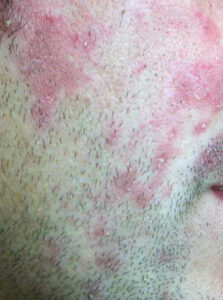
Irritant dermatitis causes redness, itching or burning post-shave. It’s common in those with sensitive skin and can be partly attributed to poor shaving technique.
Irritative folliculitis
Irritative folliculitis causes pinpoint redness or pimples, and is usually linked to skin type rather than shaving method.

Ingrown hairs
Ingrown hairs occur when a beard hair grows back into the skin rather than emerging from it. Ingrown hairs can potentially lead to infection.
Overcoming shaving challenges: DermaClub recommends
Irritant dermatitis
For those using electric razors
For razor blade users, the advice is to replace common shaving foam with Eudermic Cleansing Base. This Cleansing Base is a shaving cream used for people with sensitive or dry skin. To use it as a shaving cream, wet your face, preferably with lukewarm water, apply a small amount of Washing Cream to the skin and massage in with your fingers for a long time until you feel the hairs are soft, then shave. This cleansing cream has a greater softening power and makes the razor glide more smoothly, limiting irritation. It also does not contain SodiumLaurylSulphate, the most irritating element of common shaving foam.
After rinsing and drying, massage your face with Astringent Gel. This product cleanses and disinfects the skin by closing any small bleedings and tones the skin.
For those using electric razors
For those using electric razors, apply talc before shaving, followed by Soothing Cream post-shave. This cream has an astringent and inflammatory action.
Irritative folliculitis
For both blade shavers and electric shavers, the recommendation is to apply 2S Crema in the evening to the beard area. This cream containing sulphur and salicylic acid has an anti-folliculite effect. After shaving, Astringent Gel is applied to reduce the bacterial load as much as possible and thus prevent the formation of folliculitis.
Ingrown hairs
For both blade shaving and electric shaving, the advice is to rub in Glicosal lotion in the evening. This micropeeling lotion thins the stratum corneum and facilitates the exit of the hair. After shaving, apply Astringent Gel to reduce the bacterial load.
Beards and Shaving: Reminders from DermaClub
- A beard kept at one centimeter or longer provides excellent protection against sun damage, particularly during hotter months.
- If there are moles in the beard area, they usually pose no malignancy risk. However, consulting a dermatologist is always recommended if in any doubt.
- For cases of dermatitis (most likely seborrheic) in the beard area, suspend shaving until symptoms have subsided.
- Circular bald patches usually indicate alopecia areata, a psychosomatic form of hair loss.
- If the beard hairs gray before the hair on the scalp, it’s usually a genetic trait unrelated to aging.
Conclusion
In order to choose the most suitable shaving method, it is therefore important to understand beard shaving methods, and to have an awareness of common shaving challenges and how to treat them.