Nails: all disorders
13/09/2023
Basal cell carcinoma (BCC)
20/09/2023
Folliculitis is an inflammation of the hair follicles that can range from mild to severe. In the most severe cases, this condition can lead to permanent hair loss and leave dark patches or unsightly scars on the skin. Although it often clears up on its own, it can be uncomfortable, painful and embarrassing, particularly when it recurs or is deep-seated.
Indice
What is folliculitis?
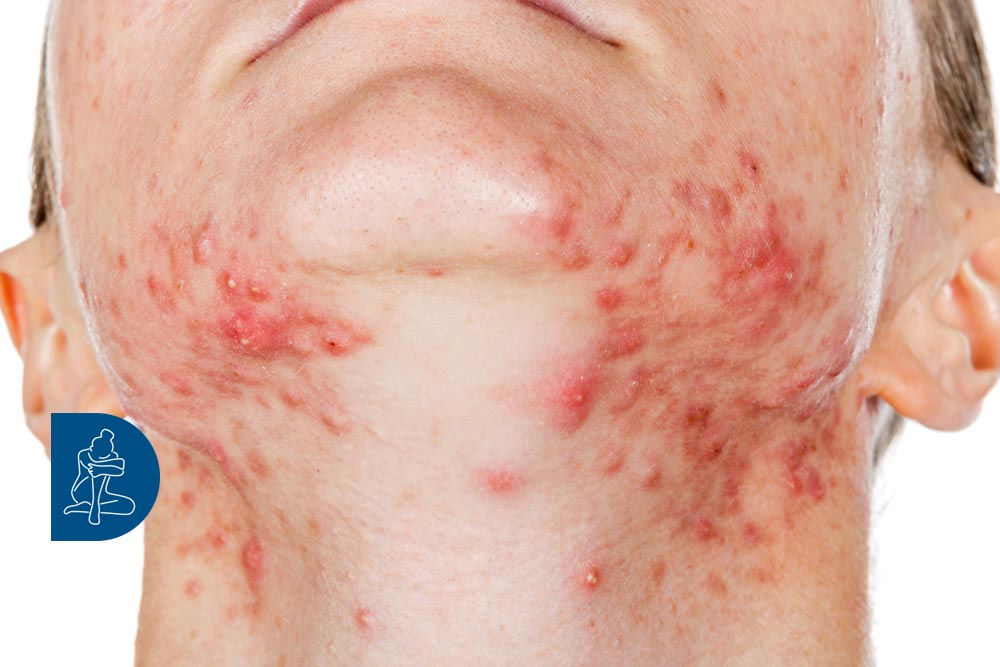
Folliculitis is an inflammation of the hair follicles caused mainly by a bacterial infection. It can affect any area of the body where hair grows, but it most commonly occurs on the face, scalp, chest, back, buttocks and legs. The condition can be localised or widespread, mild or severe, and presents as red spots, pustules or boils, often accompanied by itching or pain.
There are two main types of folliculitis:
Superficial folliculitis
This is the most common and least severe form. It affects only the outermost layer of the hair follicle.
Key features:
-
It appears as small red spots or pustules (with a white or yellow head) at the base of the hairs
-
The skin may appear red or slightly swollen
-
It may cause itching or a mild burning sensation, but rarely leaves scars
-
It usually clears up on its own within a few days
Common examples: razor burn (particularly on the face, groin or legs), folliculitis caused by sweating after a workout
Deep folliculitis
This form affects the entire hair follicle and may also spread to the surrounding tissues.
Key features:
-
It causes deeper lumps that are red and painful to the touch
-
It can develop into pus-filled abscesses that burst spontaneously
-
It is more persistent and tends to leave scars or hyperpigmented patches
-
It often requires specific medical treatment
Common examples: furunculosis, scalp impetigo, immersion folliculitis (swimming pools with contaminated water)
Generally speaking, milder cases tend to resolve spontaneously without complications. In more severe cases, however, folliculitis may develop into furunculosis (a condition in which a series of boils develop on the skin), leading to scarring or dark patches, or causing permanent damage to the hair follicle.
What causes folliculitis: the causes
Folliculitis is caused by an infection of the hair follicles by bacteria, the most common of which is Staphylococcus aureus. The infection is triggered by damage to the follicle caused by:
- rubbing (for example, when shaving or due to tight clothing)
- excessive sweating
- inflammatory conditions such as acne
- skin damage such as grazes and abrasions
- from the use of plasters, adhesive tape or plastic objects
Clinical presentation
The infection usually presents as inflammation around the opening of a hair follicle, often accompanied by the formation of a yellow-tipped spot (pustule).
Folliculitis can be painful. The skin in the affected area may be red.
In cases of deep folliculitis, the infection starts deeper within the area surrounding the hair follicle and completely involves it, leading to the formation of swollen abscesses that may burst, releasing the pus inside them, and which are painful.
How to treat folliculitis
In most cases, mild forms of folliculitis tend to clear up on their own within a few days, without the need for specific treatment. However, if the infection persists, spreads or recurs frequently, it is essential to seek targeted treatment, depending on the type and severity of the condition.
-
Isolated, superficial folliculitis: this can be treated topically by applying Dermasana with Aluminium Chloride, which helps to reduce inflammation and disinfect the area.
-
Deep folliculitis or furunculous folliculitis: in such cases, a course of oral antibiotics, prescribed by a doctor, is often necessary to effectively treat the bacterial infection.
-
Recurrent folliculitis: preventive treatment is recommended, to be carried out in the evening, by rubbing in an exfoliating lotion containing glycolic acid and salicylic acid (such as Glicosal), to reduce the build-up of dead skin cells and prevent the blockage of hair follicles.
It is strongly advised not to squeeze spots, as this can make the inflammation worse, spread the infection and increase the risk of permanent marks or scars.
In cases of widespread or particularly inflamed folliculitis, it is also advisable to temporarily stop washing with water and traditional cleansers, as these may further irritate the skin. Alternatively, it is recommended to cleanse the affected area with a potassium permanganate solution, under medical supervision.
Is folliculitis contagious?
Folliculitis is not contagious. However, it is advisable not to share personal items (such as towels and razors) with others.
Prevention and dermatological tips
There is no specific preventive strategy for folliculitis, but it is important to:
- avoid wearing clothes that are too tight or made of rough fabrics
- Shave gently and apply Dermasana with Aluminium Chloride afterwards
- avoid scratching itchy lesions
Every case of folliculitis can present differently: consult your dermatologist to find the best way to treat the condition.