Excessive foot sweating: causes and solutions
21/09/2023
Psoriasis on the foot: how to recognise and treat it
21/09/2023
Oftentimes, the feet can smell bad and give off an unpleasant odor.
Foot odor has many different causes and each cause comes with its own distinctive odor that will be recognisable to a dermatologist or podiatrist. The four most common causes of foot odor are:
- maceration
- bacterial growth
- fungal growth
- socks and footwear
Most cases of foot odor are the result of a mixture of the above.
Indice
Odor caused by maceration
Foot odor caused by the maceration of the stratum corneum occurs when: the foot has been kept in tight, enclosed footwear that does not allow perspiration, and/or the foot has been sweating intensely over a longer period of time. Both cause the feet to sweat and become hotter which contribute to hydrolysis, or the dissolution of the stratum corneum’s proteins called keratins. Keratins contain large amounts of sulfur amino acids that work together with the proteolytic enzymes of the skin’s bacteria to form sulfhydryl compounds. These are extremely volatile molecules that have a pungent odor similar to rotten eggs that spreads rapidly as soon as the foot is removed from the footwear.
Odor caused by bacterial growth
Foot odor caused by bacterial growth will differ depending on the bacterial species proliferating on the skin. Gram-bacteria (pseudomonas aeruginosa proteus, klebsiella) are very volatile due to their metabolism and cause a nauseating odor to develop. Other bacteria, such as corynebacterium spp, degrade the stratum corneum and produce an odor very similar to that caused by maceration.
Odor caused by fungi
Like dermatophytes, fungi on the stratum corneum cause an odor that is linked to the metabolism of the sulfur contained in keratin. The released sulfur compounds with hydrogen molecules to form sulfhydryl radicals that smell particularly unpleasant.
Socks and footwear
Socks and footwear can contribute significantly to foot odors forming. The previously mentioned causes of foot odor (maceration, bacterial and fungal growth) are all exacerbated by synthetic fibers, such as viscose and nylon. While socks will lose their odor after washing, shoes can retain odors even if washed or after not having been worn for a while.
Treating bad foot odor
Washing
It is a common misconception that foot odor is caused by poor hygiene and that it can be remedied by frequent, thorough washing.
In reality, too much washing can make the situation worse as it increases maceration and decreases the skin’s natural defenses.
Correctly treating foot odor requires identifying and acting on its cause(s).
Maceration
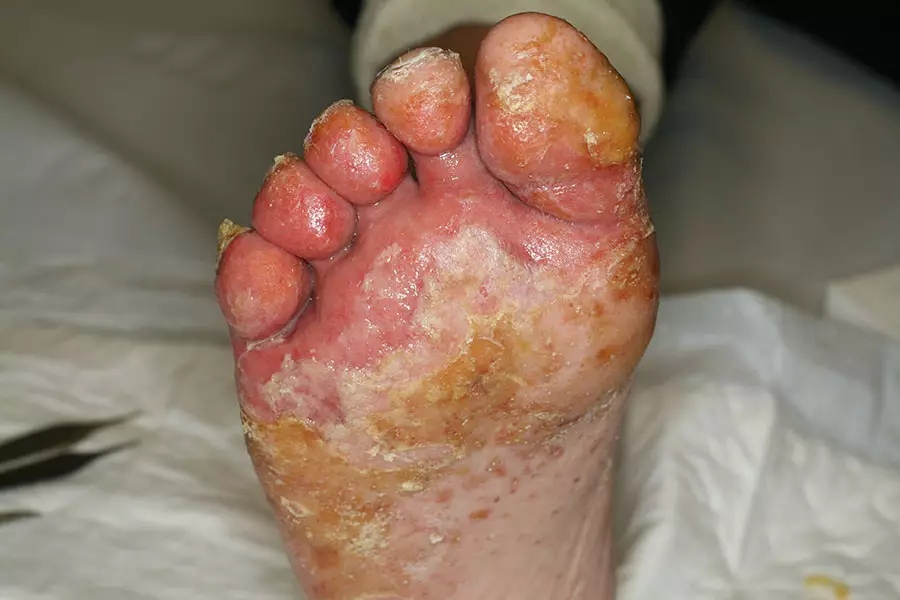
Maceration caused by a failure to remove moisture or by the use of non-breathable socks or shoe covers must be addressed with appropriate advice; however, it is not always possible to take action, for example where the use of safety footwear is required by legislation on worker protection.
A similar situation applies to those who have to work or travel in hot and humid environments.
The same thing happens after long marches in protective footwear such as that worn by the military.
In such cases, the skin looks as though the foot had been soaked in water for many hours; in fact, the English term is ‘immersion foot’.
To prevent maceration and thus the ‘immersion foot’ syndrome, we recommend applying Soothing Cream. This cream has excellent moisture-absorbing properties and helps prevent maceration.
Hyperhidrosis (excessive sweating)
Excessive sweating of the soles of the feet causes a sort of ‘soaking’ of the stratum corneum, which appears white.
If the cause of the maceration is excessive sweating, the use of Everydeo should be recommended.
This antiperspirant reduces sweating and prevents the growth of bacteria; it should be applied daily before putting on shoes.

Bacterial colonization in the stratum corneum
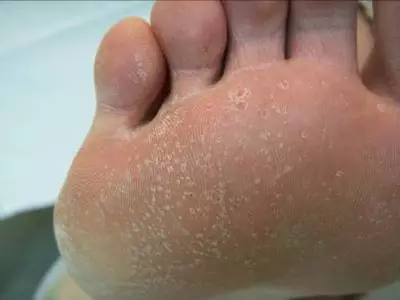
Bacterial colonisation of the stratum corneum frequently occurs when, particularly in summer, synthetic footwear is worn without socks.
When the cause of the odour is the development of bacterial colonies – that is, when small erosive craters appear on the soles of the feet, as if the skin were worm-eaten – Everydeo should be applied. This antiperspirant has both antiperspirant and antibacterial properties.
Applying the gel after washing quickly eliminates the pitted appearance of the skin and, at the same time, reduces the unpleasant odour.
It is also advisable to avoid wearing synthetic footwear.
Athlete’s Foot
The fungi that colonise the spaces between the toes belong to the genus Dermatophytes. These fungi break down the stratum corneum to feed on its proteins.
When the cause of the unpleasant odour is the presence of fungi between the toes or on the foot, Onicosana should be applied.
This cream, which relies on the antifungal action of sulphur and salicylic acid, should be applied once a day until cracks, maceration, flaking, itching, etc. have disappeared, and reapplied if symptoms of fungal infection return.